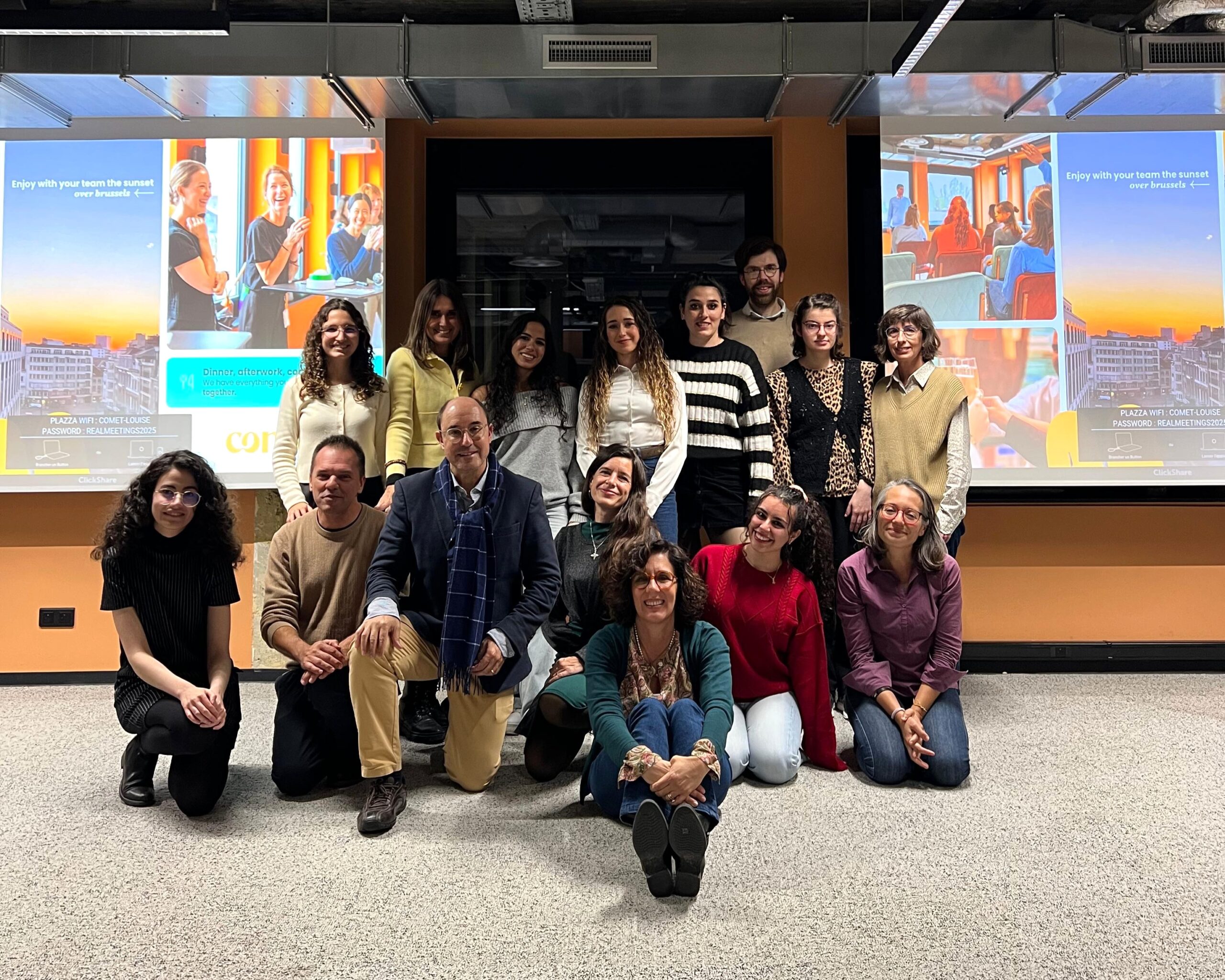
On November 15th, Autism-Europe hosted the final seminar of the Self-determination and Inclusion by Theatre (SDIT) project in Brussels. It celebrated the successful conclusion of the SDIT methodology and pilot course, designed to promote the inclusion of autistic people through the performance arts. The special screening of the SDIT documentary, highlighting the efforts of project partners in Portugal, Spain, and Italy to create inclusive theatre plays, was an intensely moving and emotional experience. It reflected both the project’s deeply personal impact on all stakeholders involved, and its systemic significance.
The SDIT project deconstructs a negative misconception: the belief that autistic people can only participate in theatre groups for people with disabilities. The project confirms that the stage is a fully inclusive space where everyone can be who they want to be. As Bárbara Vicente, from Portuguese theatre project partner Teatro da Vila, highlighted, theatre is powerful because it “gives people a voice” and teaches us to “transform the way we see difference.”
Results and constructive impact
The international seminar revealed the results of this inclusive approach, starting with impressive numbers from the pilot course. SDIT successfully trained 45 theatre professionals across Italy, Portugal, and Spain. The feedback was overwhelmingly positive: 90% of participants reported that the course met or exceeded their initial expectations. Over 70% reported they had significantly learned more about autism.
As project coordinator, José Miguel Nogueira of ISCTE University Institute of Lisbon, another project partner from Portugal, explained, “the course had a positive impact not only on theatre groups and autistic people, but also on neurotypical people. This is a project that seeks not only to include autistic people, but also to change the way the community sees autistic people”.
Theatre as a way to change society
Beyond statistics, the screening of the SDIT documentary captivated the audience and highlighted the project’s direct impact on the actors and professionals. It was also an opportunity to catch a glimpse of the theatre plays “I am what I want to be” (from Spain) and “Diversi Noi” (from Italy), presented over the year across Europe.
As partners explained during the event, the practice of theatre inherently builds confidence, supports learning and growth, and reinforces the idea of equality and human rights. Theatre’s unique power lies in helping with communication, empathy, confidence, and a sense of belonging. It is a space that allows people to express themselves and be accepted.
“That is why,” one partner concluded, “for us, theatre is not just art – it is a way to change society.”
The final documentary and the European Handbook of Inclusion through theatre are expected to be available and shared broadly in January.
For more information, visit SDIT’s website: inclusionbytheatre.org